The thing that sticks with me the most out of everything that we learned throughout the semester was the Robert Coles quote that said, “We are asking for a kind of forbearance from people who are often considerably more burdened than we are, hence our obligation to think carefully about how we approach such people and how we are with them, not to mention how we take leave of them” (Coles, 79). I am the social media manager for my frisbee team, and although it is obviously much lower stakes than what Robert Coles was writing about, I think it is still very important I consider who I am recording and whether me asking them a question will hurt them in any way. I ask the team very light hearted questions, but I have the tendency to just run up to them and tell them to do something or answer a question. I don’t ask them if they want to answer or not because I have gotten accustomed to doing it my way since I think everyone is comfortable with it. They usually are ok with it but I should start asking. I don’t have an idea for a media element, so I will use a video I posted for frisbee as the media element.
Category: Uncategorized
-
La Casita en Trenton
This documentary was focused on my father and his transition from Guatemala, his home country, to Trenton, NJ, a place where he had no family besides my mother at the time. How the struggles of being an immigrant in a new country where you don’t speak the language, don’t know the culture, don’t know the people around you, and don’t have a job to start with created a necessity of the feeling of being at home. Guatemala was his home for his entire life before he came to the US, but he left behind his family, friends, food, house, and business to start and create a better opportunity for his future family. This family is what made Trenton feel like home for him because that is what he was made the move for. I used his voice instead of doing a voiceover translation because I couldn’t do justice speaking over the struggles he was talking about in the documentary. When I was interviewing my father, I wasn’t expecting him to go into detail about he was leaving behind and what made him feel at home here in the US because I don’t expect a Guatemalan male to spend his childhood in one country and feel comfortable in another. Especially where he was living has had problems against Latino Americans and ICE raids. My documentary reveals that my father’s location isn’t what makes him feel at home, it’s the people around him, those who love and care for him, that make him feel at home.
-
La Casa
I wanted to talk about Trenton and the adversity that citizens from Trenton face. Although Trenton is the capital of New Jersey, it is full of crime and poverty, but also love and affection that comes from the Latino community. It is something that is close to my heart because that’s where I have lived my entire life. Since I’ve moved to Muhlenberg for college, I’ve seen how rough Trenton is but it also gives me a sense of home because that’s where the people I trust and love the most are found. Although it’s not known for being the nicest area, it’s my area. It’s my home.
-
Innocence in Exile: The Mochida Children and Lange’s Unflinching Lens
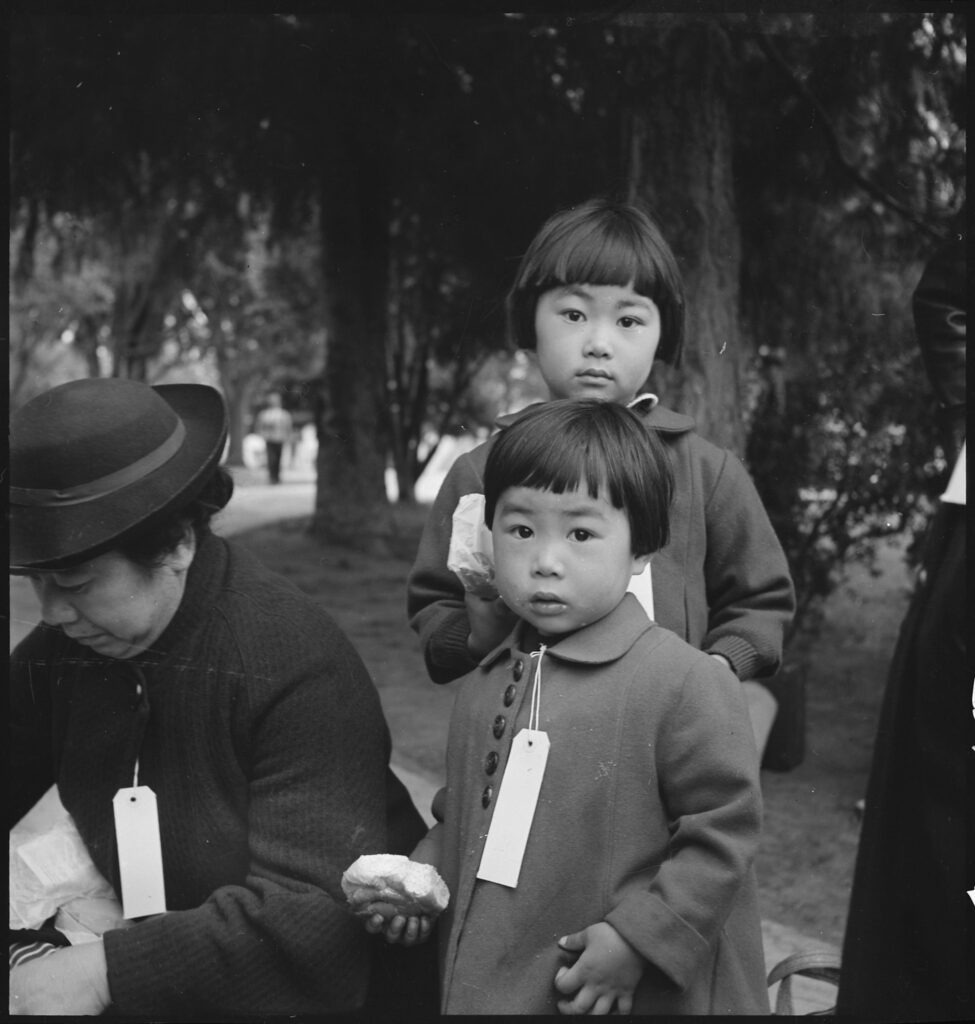
Lange, Dorothea. “Two Children of the Mochida Family Who, with Their Parents, Are Awaiting Evacuation Bus.” National Archives and Records Administration, National Archives and Records Administration, catalog.archives.gov/id/537507. Accessed 30 Oct. 2025.
Dorothea Lange’s World War II photographs are powerful and true to the representation she attempts in her photos. This photo shows 2 girls waiting for a bus to evacuate them to a relocation camp. Lange’s main goal with photos during this time was to “encourage social pleasure” (Gordon). Gordon also writes “that beauty, intelligence, and moral strength are found among people of all circumstances–has profound political implications, of course. Her greatest commitment, though, was to what she called the ‘visual life’” (Gordon). The beauty that is found in this photo is that at this point, the family is still together and able to spend this time they have together before they get sent to the camps, where no one knew what was going to happen.
Although Lange wasn’t going through what these families were going through, she could sense the pain and suffering and the inequality that was going on at the time. Her photos were not used just to look and to move on with your day, but rather to show America what was truly going on. To see what they were doing to these innocent Japanese Americans. The way that Lange photographs her subjects doesn’t change either. It’s usually a portrait instead of a candid shot. There is respect for her subjects in the photo. Each photo of hers has a deeper meaning than the surface-level shot. In this photo, the little girl with the sandwich in her hand was given to her by someone in the church, showing the care that they still had for one another even during this time of distress that they were going through. The 2 sisters being together showing how family sticks together as well is a very important element of this photo. The photo is so much deeper than 2 girls standing with one of them having a sandwich in her hand.
-
Tension With A Camera
Around 35:30 to 40:00, the film explains the altercation between Hobart Ison and Hugh O’Connor, which ended with O’Connor being shot and killed. Elizabeth Barret, the documentarian, could’ve used one person to narrate the entire scene. Instead, Barret decided to use a conglomerate of different storytellers to narrate what happened. Using people from both sides of the story and using some of O’Connor’s archival footage helps build this narrative and tension. Using the trees where the altercation occurred, which is something that Barrett does to help increase psychological tension and show where in the story we are.
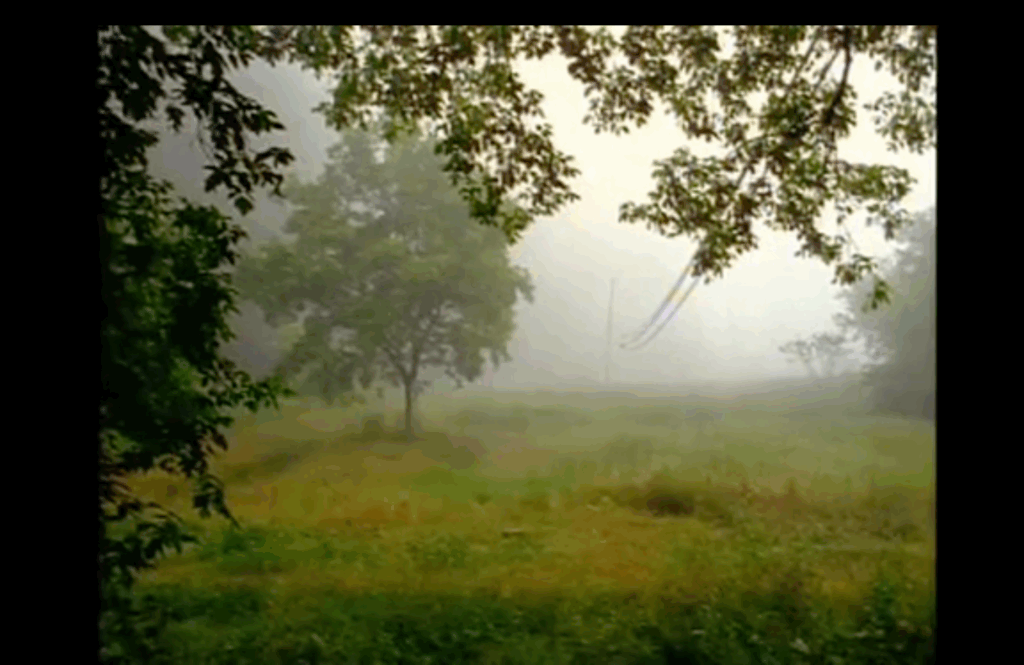
This scene could have been easily made without the gunshot sounds added, but they add to the tension due to the current narrative. Barret is demonstrating the conflict between a documentarian’s goal to reveal important truths and Ison’s protection over his land and the potential false representation the documentary could bring. The psychological tension is created due to both sides trying to do their own job. This is heightened by using allies of both parties to share the story that was occurring.
This type of scene is not unique to this movie. This type of tension is seen in Coles. ” ‘Serves us right for being so convenient to you folks, and telling the school people we’d accept visitors,’ she said, and I recall thinking hard about that word accept. To be sure, it was an aspect of a particular vernacular, but it had a message for all of us; we are asking for a kind of forbearance from people who are often considerably more burdened than we are, hence our obligation to think carefully about how we approach such people and how we are with them.” (p.79) This passage helps us realize that people are not as comfortable with sharing their private lives as documentarians think. This is the ethical dilemma that documentarians must think through. Documentarians must approach these dilemmas as normal humans rather than as subjects of their documentaries. Barret, being from the area where the shooting occurred, Barret grew up as a neighbor with a camera instead of a stranger like O’Connor was. Barret knows what the town is like around cameras and people caring about their privacy. She understands that cameras aren’t normal for the citizens of this town and uses her knowledge to create her film.
-
The Moral Crisis
When we think about our lives, we often focus on how they can be better without taking the time to appreciate what we already have. James Agee had the opportunity to go on a journalism assignment to South Alabama during the Great Depression. This caused him to write the book Let Us Now Praise Famous Men.
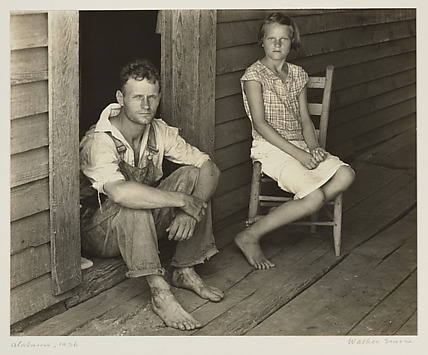
In the book, Coles emphasizes Agee’s feeling of being an outsider in the presence of the farmers. Agee is trying to understand his location as he is writing the novel. Agee is trying to truthfully represent someone else’s world, a world that is not his own. This is the moral crisis that is spoken about in the chapter. As Coles says on page 27, “Both Agee and Orwell seem to know that they are in uncertain territory as they try to address their audience.” They were sent to a location where they are the odd ones out, instead of these farmers who would be the outliers in almost any other place.
In my home in New Jersey, I went through a similar but opposite situation as well. I grew up in Trenton, NJ, with immigrant parents from Guatemala. Trenton is full of people who look just like me and act like me. My parents enrolled me in a private school that was known for being expensive, where only the rich people live. This was what I was getting ready for. When I first showed up at Princeton Day School, I was the only Hispanic student in my class. I was in a location that I was never used to, with so much new technology that PDS had. My old school never had anything like this. I was trying to adapt and understand the place I was going to spend my next 10 years of education at. I felt like an outsider as Agee felt when he went to south Alabama on his mission.
-
Island in Between: Deception at Home?
Kinmen, Taiwan, was known as the front line of Taiwan, being so close to the Chinese Mainland that Kinmen residents could see the city of Xiamen across the bay. In the documentary, Taiwan is explained to be the safe and correct side of China, according to the Taiwanese. Their home away from communism was correct for them because that is what kept them safe. Being sent to Kinmen was seen as a death sentence because the folks in Kinmen were expected to protect Taiwan even after the desire to take back the Mainland had long passed.
In the documentary, Island in Between, our narrator helps us see what home was like for the Taiwanese.
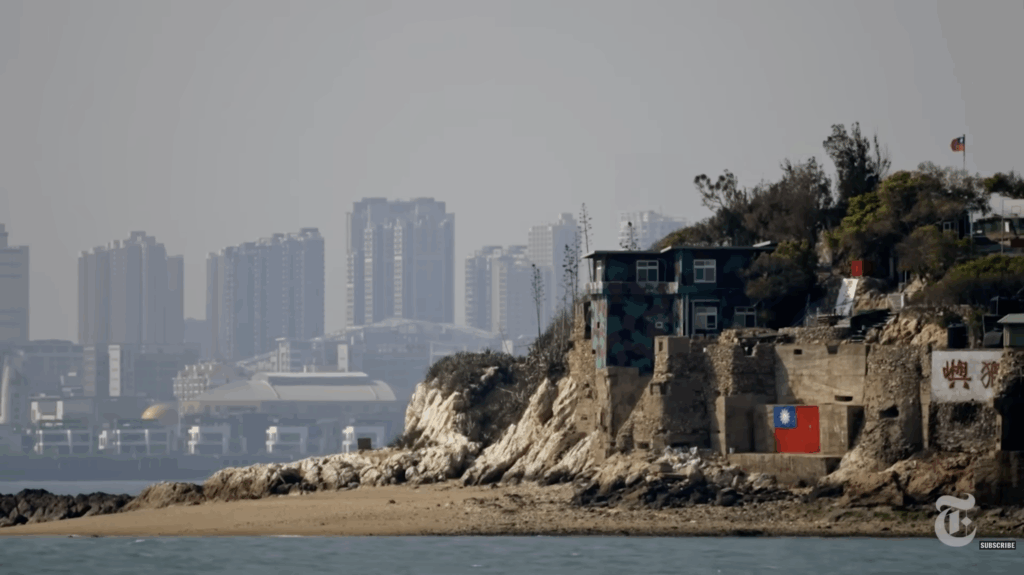
As a child, the Kinmen shore was what separated the good from the bad. The Taiwanese to the communist Chinese. This is what they grew up knowing, without ever visiting China once. This was until the ferry opened. Moving from living in Taiwan to the US and China as well, it really challenged what he learned at home. When he visits, he sees fun being had, smiles everywhere, and so much color at all times. The complete opposite what he had learned at home. Home is the place where you feel the most comfort, and leaving home can be scary, but when you leave home and see that what you learned wasn’t at all what it’s like at home, it can put a damper on home.
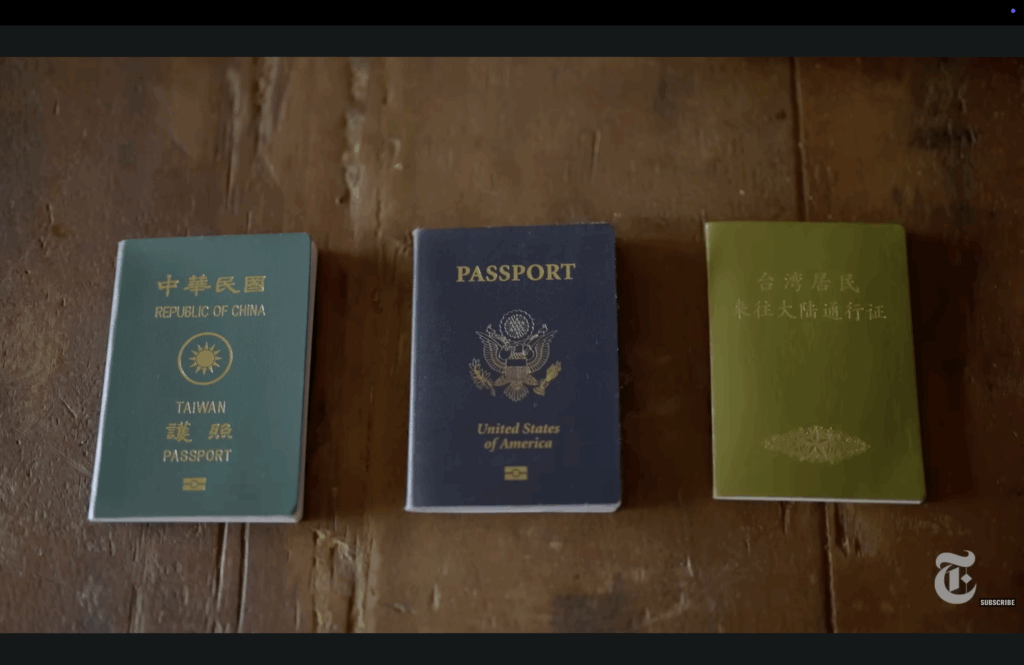
The way the narrator describes his situation is like “his parents are in a 3-way custody battle…each one with their own dysfunctions.” All 3 countries think what they’re doing is right. The narrator does not know which to call home anymore. Kinmen, though, as a home has always seemed to be dangerous because, again, they are the front lines. Yet, when living in Kinmen, there is a certain peace that comes with it. The citizens come with kindness and, the scenery is soothing. Nothing like what “home” would tell them it’s like.